For small businesses, generating leads is only the first step. The harder part comes after that, once a prospect shows interest. Inconsistent follow-ups, scattered customer data, and unclear deal status often get in the way of turning that interest into an actual sale. Sustainable SMB sales growth doesn't come from chasing more leads. It comes from building a process that reliably moves the right leads forward.
In this article, we’ll explore how to grow sales for small businesses by tightening the sales process, responding faster with consistent follow-ups, and focusing on high-potential leads.
Why SMBs Lose Leads Before They Become Customers
Financial products rarely close after one conversation. Prospects need time to To build a successful sales process, SMBs sales must first understand why they typically fail and these are the same handful of problems that show up across most small sales teams, regardless of industry. They're exactly what effective lead conversion strategies for SMBs are designed to fix.
Lead Management Is Scattered
Enquiries come in through calls, emails, and spreadsheets, but nothing ties them together. Some leads get logged, others get forgotten, and no one has a clear view of who's following up on what.
Follow-Up Is Inconsistent and Often Missed
For example: One lead gets three follow-ups, another gets one and then silence, even though buyers rarely decide after a single touchpoint. With ten conversations to juggle, replies slip: no response by day 2, and by day 6 the prospect has already moved on to a faster competitor.
The pipeline isn't visible
Sales deals are often scattered across spreadsheets and other platform, so no one has a single accurate view of what status each deal is in, or which ones are quietly at risk.
High-Value Leads Aren't Prioritised
A prospect who requested a demo gets the same attention as someone who downloaded a single guide and never opened another email, which means time gets spent in the wrong places.
Stalled Deals Go Unnoticed
A prospect goes quiet, fading from attention until the deal dies from neglect rather than an actual "no."
These challenges rarely come down to effort. They’re usually caused by inconsistent processes that make it harder for small teams to follow-up on time, prioritise the right leads, and keep track of their pipeline. Without a clear process, good leads can slip through unnoticed, and deals can stall before anyone notices.
Fixing SMB sales growth really starts with fixing the process behind it. The sales strategies below are about building more consistency into follow-ups, lead prioritization, pipeline management, and moving deals forward.
Proven Sales Strategies for Small Businesses: Converting More Leads into Customers
Most small businesses don't need more leads. They need a better system to convert the leads they already have. The most effective sales strategies for small businesses have one thing in common: they're not only clever but also consistent. Below are five lead conversion strategies for SMBs, each focused on a specific point in the sales process where deals are typically lost.
Respond Fast and Never Miss the First Follow-Up
Response time is one of the most well-documented factors in sales and one of the most ignored. Among B2B sales tips for SMBs, this is the one backed by the clearest data: a lead who just filled out a form, booked a call, or asked about pricing is only interested in a short window. Every hour without a reply, that window shrinks, and a competitor's faster response starts to win the deal, even when the product itself is weaker.
The fix isn't asking reps to try harder. It's building a system that doesn't rely on memory. A lead who needs a follow-up gets one automatically, without anyone having to remember to send it.
Make Your Sales Pipeline Visible
Many small businesses "have a pipeline" in the sense that deals are recorded somewhere, but recording deals isn't the same as seeing them clearly. Real visibility means anyone on the team can look at the pipeline and immediately answer how many deals are in each stage, which ones haven't moved in two weeks, and whether the business is on track to hit this month's target.
Without that visibility, sales leaders end up managing by assumption. A stalling deal looks identical to a progressing one until someone checks, and by then it's often too late to fix. One of the simplest sales conversion tips for small business is to make deal progress visible before a stalled opportunity becomes a lost one.
Prioritise Leads Based on Buying Intent
Most SMB sales teams work leads in the order they arrive. It feels fair, but it rarely makes the best use of limited selling time. Treating a casual newsletter subscriber the same as a prospect who revisited the pricing page three times means the higher value lead can sit behind five others that were never going to convert.
Scoring leads on signals that predict buying intent, such as engagement level, fit, and recency of activity, ensures the leads most likely to close get attention first. This is one of the more overlooked lead conversion strategies for SMBs, since it doesn't require generating more leads, just working the existing ones in a smarter order.
Create a Consistent Follow-Up Schedule
A single follow-up email is not a strategy. Most buying decisions, especially in B2B, take multiple touchpoints spread across days or weeks, because the buyer is busy, comparing options internally, or waiting on approval from someone else. A lead that doesn't respond to the first message isn't necessarily lost. It may simply need to hear from the business again, with something slightly different to say each time.
What works is a defined routine: a planned sequence of touches spaced out over a realistic window, for example:
An initial call or email within the first hour of a lead coming in
A follow-up email two to three days later, if there's no response
A second follow-up, with new information or a different angle, around day five to seven
A final check in a week or two out before moving the lead to long-term nurture
What breaks this in practice isn't a lack of planning. It's that plans get abandoned the moment a rep gets busy, and a lead that was supposed to get a day 7 reach out never does.
Catch Stalled Deals Before They Go Cold
Every pipeline has deals that go quiet for a while. Sometimes it's because the buyer needs more time for internal approval, budgets are being reworked, decision-makers change, or priorities may shift. This doesn’t mean the deal is dead. But if no one follow-ups at the right time, it can lose steam and become much harder to close.
The key is to spot these stalls early by tracking activity, follow-ups, and deal progress. A well-timed check-in can often bring a buyer back before the deal goes completely cold. For small businesses, staying on top of stalled deals can lift conversion from the pipeline you already have, without needing to generate a single new lead.
How Workpex CRM Supports Every Stage of Conversion
Knowing what to do is one thing. Actually, doing it, consistently, gets a lot harder when a small team is juggling prospects at different stages. Workpex CRM adds structure to those everyday sales tasks, so teams can follow-up on time, stay on top of the pipeline, prioritise the right opportunities, and catch stalled deals before they go cold.
Automated Follow-Up Reminders
Juggling several prospects at once makes it easy to lose track of who needs a nudge and when. A CRM surfaces those follow-ups on its own, keeping reps on schedule without leaning on memory.
Visual Pipeline Tracking
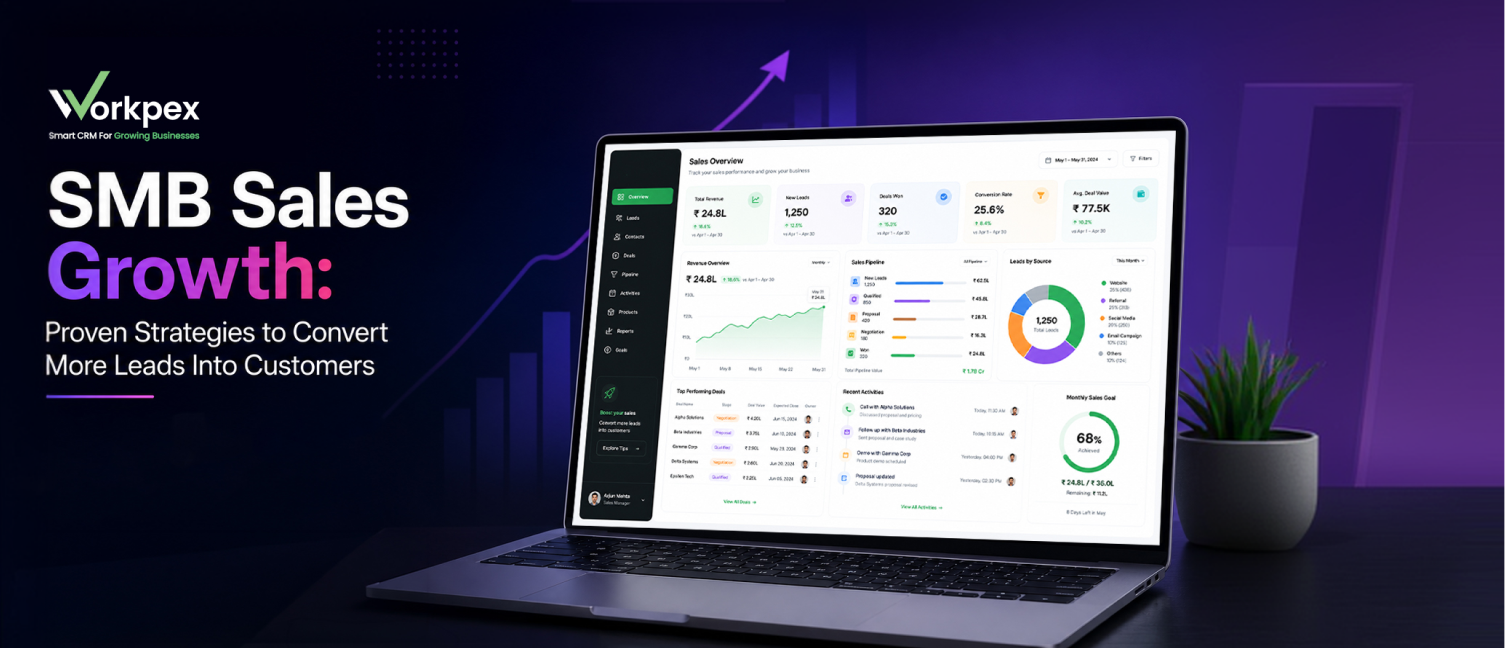
Once deals start piling up, spreadsheets, inboxes, and scattered notes stop being enough. A CRM lays the pipeline out visually, giving teams a clear read on where every deal stands and what to act on next.
Lead Scoring
Not every lead is worth the same attention right away. Workpex's lead scoring sorts leads by relevance and engagement, so reps put their time where it's actually likely to convert.
Stagnant Lead Alerts:
Deals can sit untouched for weeks without technically being lost. The CRM flags these stagnant opportunities so reps can go back, reconnect, and act before the deal fades completely.
Bringing It Together
Sales growth for small businesses usually comes down to fixing small gaps, the missed follow-up, the unclear pipeline, the lead that never got prioritised, went quiet and was never chased. Fix those, and conversions follow.
Workpex CRM brings all of it into one place: manage leads, track deals, prioritise the right opportunities, and stay on top of follow-ups without the guesswork. A more structured process behind your conversions means more leads turning into paying customers, and sales growth that holds up over time.
Ready to convert more leads? Book a free Workpex demo and see what it can do for your SMB's sales growth.