
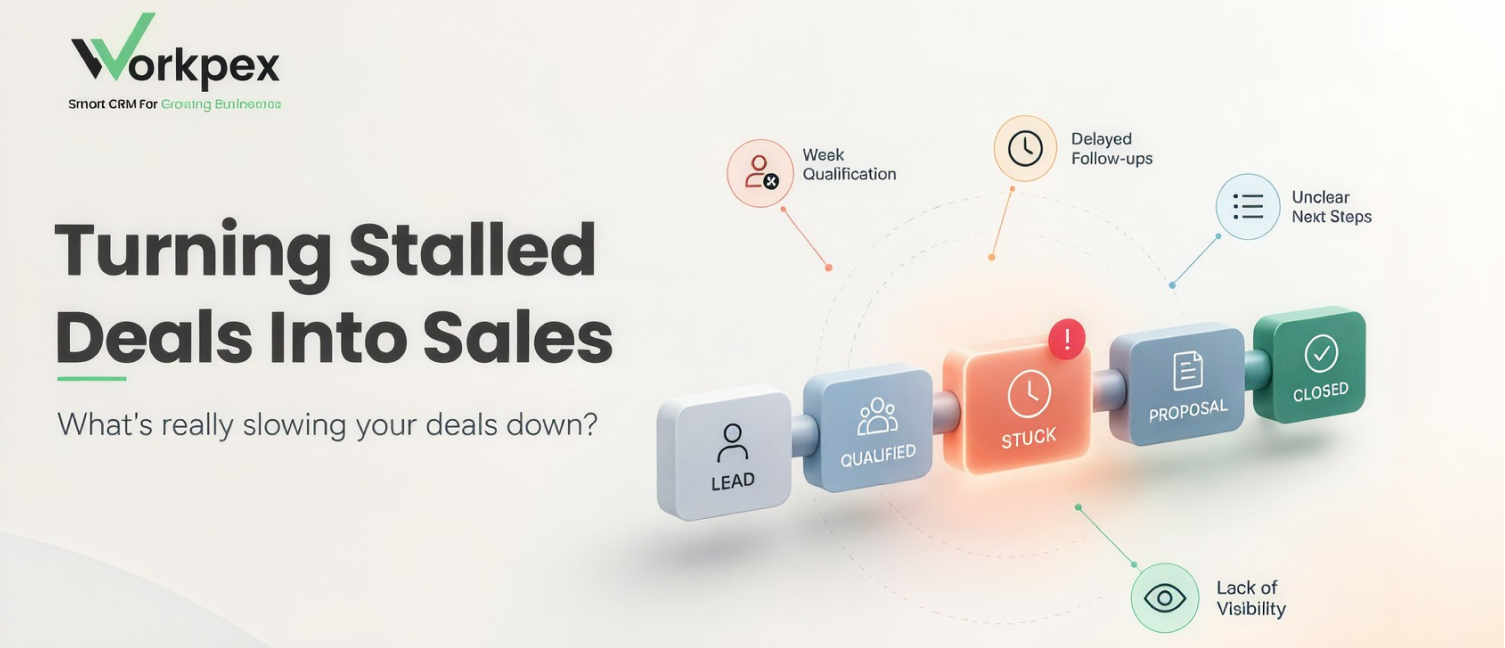
Every sales team has them: opportunities that looked promising a few weeks ago and now just sit there, neither closed nor clearly dead. The deal shows up on every pipeline review with the same update as last week’s.
Understanding why deals get stuck in the sales pipeline is the first step to fixing the problem. Stalled deals rarely fail because of one dramatic event. More often, small gaps in process, follow-up, or information quietly compound until the deal loses momentum entirely. This article looks at what causes stalled sales opportunities, how to spot them early, and how to move stalled sales opportunities forward once they've gone quiet.
What Is a Sales Opportunity?
A sales opportunity is a qualified prospect who has shown genuine interest and is considered likely enough to convert that a sales team actively works to close the deal. It differs from a raw lead, which may not yet be qualified or ready for direct sales engagement. Once qualified, a lead typically moves through defined pipeline stages, such as contacted, follow-up, and opportunity, before reaching an outcome of won or lost. Knowing what a sales opportunity is, and what separates it from a plain lead, makes it easier to spot the point where things start to go wrong, usually somewhere in the stretch between qualification and close.
Common Sales Pipeline Problems
Most common sales pipeline problems fall into a handful of recurring patterns that tend to connect to one another rather than happen in isolation, so it helps to look at them roughly in the order they tend to appear.
Weak or Incomplete Qualification
Many stalls start here, before the deal is even labelled an opportunity. Under pressure to hit activity targets, a rep may move a lead forward without confirming budget, authority, need, or timeline. The result is an opportunity that sits in an early stage far longer than it should, or advances quickly and then stalls the moment real questions come up. A telltale sign is vague notes with no confirmed budget range or decision timeline. When this is the root cause, the fix isn't a harder push forward, but going back to qualification basics before investing more time.
Delayed or Inconsistent Follow-Ups
Once an opportunity is qualified, momentum depends on someone staying in touch, and this is where things frequently break down. Reps juggling many deals can lose track of who needs a follow-up and when, so opportunities go cold simply because nobody reached out. The clearest sign is a last-activity date far older than expected for the stage, with nothing scheduled next. Reviewing opportunities by last activity date, rather than by stage alone, surfaces these gaps quickly, and a consistent follow-up cadence tracked in a shared system is what closes them for good.
Unclear Next Steps
Even with regular follow-up, a deal can stall if nobody knows what happens next. A call or meeting often ends without a specific, agreed-upon action, so both sides assume the other will take it from there, and neither does. This shows up as an empty or vague next-step field, one of the clearest early warning signs of a stall. The fix is simple in principle: end every interaction with a specific next step that has a date and an owner attached.
Poor Prioritisation
Sometimes the issue isn't any single deal but how time gets divided across all of them. Reps often gravitate toward opportunities that are easiest to reach rather than the ones most likely to close, so larger or more complex deals quietly lose out on attention. Comparing deal value and stage against how recently each one was touched usually reveals the mismatch. A simple scoring model based on deal size, likelihood to close, and timeline, reviewed regularly, keeps attention where it should be.
Decision-Maker or Stakeholder Delays
Prioritisation aside, a deal can also stall for reasons outside the rep's control. The person a rep has been speaking with may not hold final purchasing authority, or the deal may need sign-off from stakeholders never brought into the conversation. This tends to appear right after a seemingly positive conversation, often at the exact point where approval should happen. Checking whether the opportunity names a confirmed decision-maker is usually enough to identify it, and the fix is engaging every relevant stakeholder early rather than relying on a single contact to relay information internally.
Lack of Visibility into Deal Progress
Several causes above are hard to catch precisely because nobody can see them clearly, which is its own problem. When sales activity isn't logged consistently, managers and reps lose track of where deals stand, especially when conversations happen outside any shared system. The warning sign is an opportunity with a stage attached but almost no detail on recent conversations or open objections. Centralising call logs and follow-ups in one place gives anyone reviewing the pipeline an accurate view of where things really stand.
Opportunities Remaining in the Same Stage Too Long
Left unaddressed, most causes above eventually produce the same symptom: a deal that never advances, either because nobody is pushing it or because nobody defined what "ready to advance" looks like. Compared to deals that eventually closed, these show an unusually long time-in-stage. Tracking average time-in-stage for won deals, then flagging anything that exceeds it, catches this early and keeps deals from sitting unnoticed.
Missing or Outdated Opportunity Information
Finally, some stalls have less to do with the deal itself and more to do with the record of it. Details such as contact information, budget, or timeline get logged once and never revisited, especially when multiple people touch the same account over time. The result is a record that contradicts what's happening, such as a timeline that has passed or a contact who has changed roles. Periodically auditing open opportunities for outdated fields and making updates part of the follow-up routine itself rather than a separate task, keeps records aligned with reality.
How to Prevent Deals from Stalling
Preventing stalled deals is less about a single fix and more about habits that reinforce each other across the sales process:
Qualify thoroughly before an opportunity enters the pipeline, not after
Set a clear, specific next step at the end of every interaction
Follow a consistent follow-up cadence based on deal stage
Identify all relevant stakeholders early rather than relying on one contact
Keep opportunity records current as details change
Review time-in-stage regularly rather than only at scheduled pipeline meetings
Prioritise deals based on value and likelihood to close, not ease of contact
None of these habits work well alone; a team that qualifies carefully but never checks time-in-stage will still miss stalls. Taken together, though, they cover most of the ground where deals typically go quiet. In practice, how to prevent deals from stalling comes down to visibility and consistency more than any single tool or tactic.
How to Move Stalled Sales Opportunities Forward
For opportunities that have already stalled, the priority is diagnosing the specific cause first, since reviving a deal stalled by stakeholder delays takes a different move than one stalled by unclear next steps.
Re-qualify the opportunity. Confirm the original need, budget, and timeline still hold, since circumstances change and an old qualification may no longer apply.
Reconnect with a clear reason. Reach out with a specific update or question rather than a generic check-in, which is easy for a prospect to ignore.
Confirm the decision process. If the deal stalled after reaching a decision-maker, ask directly what approval steps remain and who else needs to be involved.
Set a firm next step with a date. A specific next action with a deadline gives the deal a concrete reason to move again.
Reassess priority. A deal stalled repeatedly despite genuine effort may simply be lower priority than it first appeared.
Bringing It Together
Deals rarely stall for one obvious reason. More often, it's a chain: weak qualification leads to unclear next steps, which lead to inconsistent follow-up, while a lack of visibility lets all of it go unnoticed until the opportunity has sat in the same stage for weeks. The common thread is visibility: sales teams that can clearly see where a deal stands, what's been done, and what's still pending are far better positioned to catch a stall early and act on it.
This is where tracking sales activity, follow-ups, and opportunity stages in one place makes a real difference. Workpex CRM tracks every opportunity through New Lead, Contacted, Follow-up, Opportunity, Won, or Lost stages, with real-time visibility into calls, activities, and follow-ups across the team. If stalled sales opportunities have been a recurring problem in your pipeline, explore Workpex CRM can help your team catch them earlier and keep opportunities moving.